Biya's Overseas Stay Exposes Gaps in Cameroon's Constitution
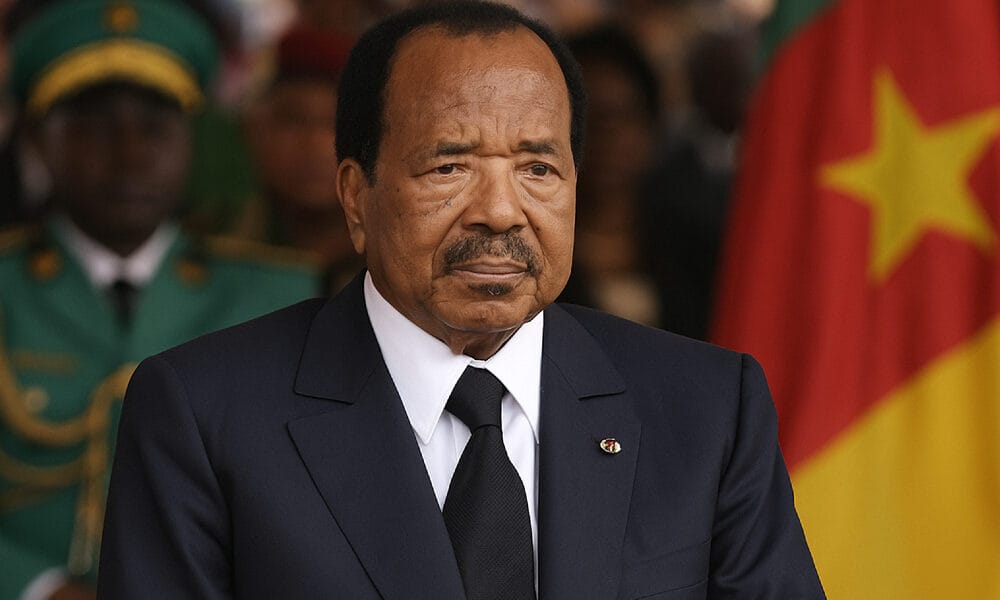
As the President's prolonged absence stretches beyond 50 days, legal ambiguity over executive authority has reignited debate about accountability, constitutional reform and the limits of presidential power
President Paul Biya's prolonged stay abroad has reopened one of the most fundamental constitutional questions confronting Cameroon: can the highest office of the Republic be effectively exercised from outside the country's borders for an extended period without creating a crisis of confidence in the institutions of the State?
What the Civil Cabinet initially described as a ‘short private stay in Europe’ has evolved into a national debate over constitutional authority, democratic accountability and the concentration of executive power. More than 50 days after departing Yaoundé on June 7, 2026, the 93-year-old President remains outside the country, fuelling legal, political and public discussion over the limits of presidential authority.
The controversy has moved beyond speculation about President Biya's health. It now raises broader questions about whether Cameroon\'s constitutional framework adequately addresses prolonged presidential absences and whether a presidency that is heavily personalised can effectively function from abroad.
Government insists there is no vacuum
The government has consistently rejected suggestions that the President\'s absence has created a constitutional or institutional crisis.
Minister of State and CPDM Communication Secretary Jacques Fame Ndongo has repeatedly maintained that there is no vacancy at the helm of the State, insisting that President Biya continues to exercise all the constitutional powers vested in him.
Communication Minister René Emmanuel Sadi has also dismissed reports alleging that the President was admitted to a Geneva clinic following an alleged malaise during National Day celebrations, describing such reports as false and reaffirming that the Head of State continues to supervise national affairs.
Presidential Director of the Civil Cabinet Samuel Mvondo Ayolo has equally denied persistent rumours surrounding the President\'s health, insisting that President Biya has never been hospitalised and declaring that those anticipating his demise \"may die before him".
Government officials further point to the continued publication of presidential decrees as evidence that executive authority remains fully operational despite the President\'s physical absence from national territory.
For the executive, constitutional authority is defined not by geography but by the continued exercise of presidential powers.
Opposition demands transparency
The opposition, however, sees the matter differently.
Social Democratic Front Chairman Joshua Osih has argued that, if the President is receiving medical treatment abroad, he should return home and seek care within Cameroon's own health system.
Human rights lawyer Barrister Alice Nkom contends that an extended and unexplained absence raises legitimate constitutional concerns and should not be dismissed as a routine matter.
Opposition MP Jean Michel Nintcheu has urged the Constitutional Council to examine whether the prolonged absence amounts to a vacancy in the presidency.
Meanwhile, Cameroon Party for National Reconciliation leader Cabral Libii argues that, although the Constitution imposes no explicit time limit on presidential travel abroad, the current situation exposes significant constitutional shortcomings that require reform.
Their common concern is less about the President\'s location than about transparency, accountability and the absence of clear constitutional safeguards.
A semi-presidential system in law
At the heart of the debate lies Cameroon\'s constitutional architecture.
The country is constitutionally organised as a hybrid semi-presidential republic, combining elements of both presidential and parliamentary systems.
Executive authority is formally divided between the President of the Republic and the Prime Minister.
The President, elected by universal suffrage for a renewable seven-year term, serves as Head of State. He defines national policy, commands the armed forces, appoints senior public officials and exercises extensive executive authority, including the power to issue presidential decrees.
The Prime Minister, appointed by the President, serves as Head of Government and oversees the day-to-day administration of government while implementing presidential policies.
Legislative authority rests with a bicameral Parliament comprising the National Assembly and the Senate.
On paper, the institutional framework resembles that of other semi-presidential democracies, where executive responsibilities are shared between two centres of authority.
A hyper-presidential reality
Political practice, however, presents a different picture.
Unlike many semi-presidential systems, Cameroon's Prime Minister is neither selected by nor politically accountable to an independent parliamentary majority. The office exists largely at the discretion of the President, who may appoint or dismiss the Prime Minister at any time.
This significantly limits the office\'s political autonomy.
Beyond the Prime Minister, the President exercises considerable influence over appointments throughout the State, including governors, prefects, military commanders, senior civil servants, magistrates and the heads of strategic public institutions.
The ruling Cameroon People's Democratic Movement (CPDM) has also maintained overwhelming control of Parliament for decades, reducing the legislature\'s capacity to serve as an effective institutional counterweight to executive authority.
Although the judiciary is constitutionally recognised as an independent branch of government, judicial appointments remain under presidential authority, leading many observers to question the practical independence of the courts.
Constitutional amendments adopted in 2008 further consolidated presidential authority by removing presidential term limits and granting immunity for acts performed in office.
For many constitutional scholars, these realities have transformed Cameroon from a nominal semi-presidential republic into one of Africa's most centralised executive systems.
Constitutional silence on prolonged absence
Ironically, while the Constitution clearly defines presidential powers, it provides little guidance on how those powers should be exercised during an extended absence from national territory.
The Constitution specifies only three circumstances under which the Constitutional Council may declare the presidency vacant: the death of the President, formal resignation, or permanent incapacity established through the constitutional process.
It does not prescribe a maximum duration for presidential travel abroad.
Nor does it require the temporary transfer of executive powers during such absences.
This constitutional silence has created a legal grey area.
Government supporters argue that, because none of the constitutional conditions for a vacancy has been met, President Biya remains fully empowered to govern regardless of his location.
Critics respond that constitutional legality should not be confused with democratic legitimacy.
Beyond constitutional legality
The debate ultimately raises broader questions about leadership in the digital age.
Modern technology allows presidents to sign documents electronically, hold virtual meetings and communicate instantly across continents.
Yet constitutional experts argue that the presidency is more than an administrative office.
As Head of State, the President embodies national unity, reassures citizens during periods of uncertainty and symbolises the continuity of the Republic.
Those responsibilities, they argue, cannot always be exercised remotely.
For many observers, the central issue is therefore not whether presidential decrees can be signed from Europe, but whether political leadership itself can be effectively exercised from abroad for an extended period.
A test for Cameroon\'s institutions
Whether President Biya returns in the coming days or remains abroad for longer, the controversy has already laid bare significant constitutional ambiguities.
It has revived calls for reforms to clarify procedures governing prolonged presidential absence, the temporary delegation of executive authority and official communication concerning the Head of State.
For now, the government maintains that Cameroon continues to function normally and that no constitutional crisis exists.
The opposition remains unconvinced.
As the debate intensifies, one question continues to dominate Cameroon\'s political discourse: Can the presidency remain physically absent from the country while retaining the confidence of the people it is constitutionally meant to serve?
Whether President Paul Biya returns tomorrow or weeks from now, the constitutional questions raised by his prolonged absence are unlikely to disappear. The controversy has exposed legal ambiguities that successive governments have overlooked for decades and has revived calls for reforms that clearly define the limits of presidential absence, the delegation of executive authority and the safeguards necessary to preserve public confidence in the institutions of the State.
Until such reforms are undertaken, the debate over whether Cameroon can be effectively governed from abroad will remain unresolved.
Published on: July 31, 2026