Biya Goes on Another Borrowing Spree
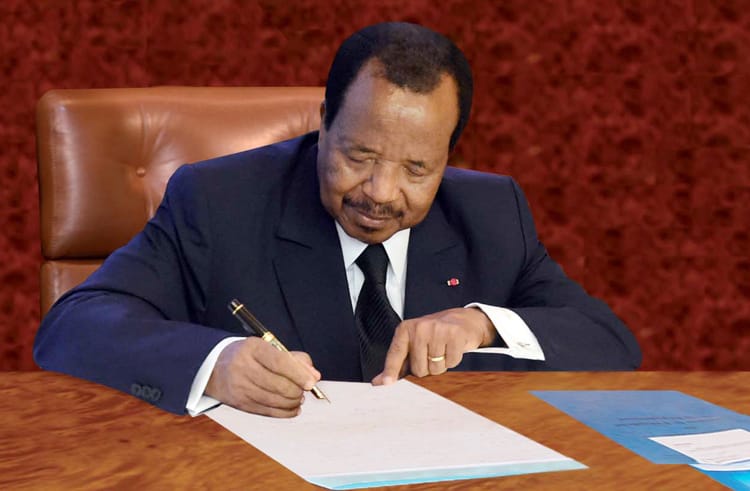
President Paul Biya has authorised the mobilisation of about CFA25.7 billion in fresh external financing to support tourism infrastructure and social protection projects, as Cameroon continues to rely on borrowing to fund development programmes.
In decrees signed on July 22, 2026, the Head of State empowered the Minister of Economy, Planning and Regional Development to conclude a CFA4.12 billion loan agreement with Deutsche Bank Spain for additional works under Phase I of the Yaounde Municipal Lake Tourism and Economic Development Project.
The financing includes a Buyer’s Credit of CFA3.56 billion and a Commercial Credit of CFA562.3 million.
In a separate decree, President Biya authorised the mobilisation of a 33-million-euro loan, estimated at CFA21.6 billion, from the International Development Association (IDA) to finance the Adaptive Safety Nets and Economic Inclusion Project (PFS-AIE).
The two loans bring the newly approved external financing to approximately CFA25.7 billion, with government officials saying the funds will strengthen tourism infrastructure, expand social protection programmes and promote economic inclusion.
The new borrowing comes as Cameroon’s public debt continues to grow. The country’s total public debt currently stands at about CFA15.416 trillion, representing approximately 44.3 per cent of Gross Domestic Product (GDP).
Although the debt-to-GDP ratio remains below the 70 per cent CEMAC regional threshold, international financial institutions have maintained that Cameroon faces a high risk of debt distress.
According to debt data, central government obligations account for about 93.6 per cent of the total debt stock, while external loans represent more than 64 per cent of direct debt.
The Autonomous Sinking Fund (CAA) manages Cameroon’s debt portfolio, with the government maintaining a medium-term strategy aimed at keeping debt below 50 per cent of GDP.
However, pressure remains from debt servicing obligations, accumulated treasury arrears, floating debt, and challenges linked to the short-term supplier debt of the National Refining Company (SONARA).
To finance the 2026 State budget, the government plans to continue using a combination of domestic treasury bonds, bank borrowing, and possible international bond issuances.
By Lasha Kingsly
Published on: July 24, 2026