Dr Richard Munang Appointed to Lead UN University’s Africa Natural Resources Institute
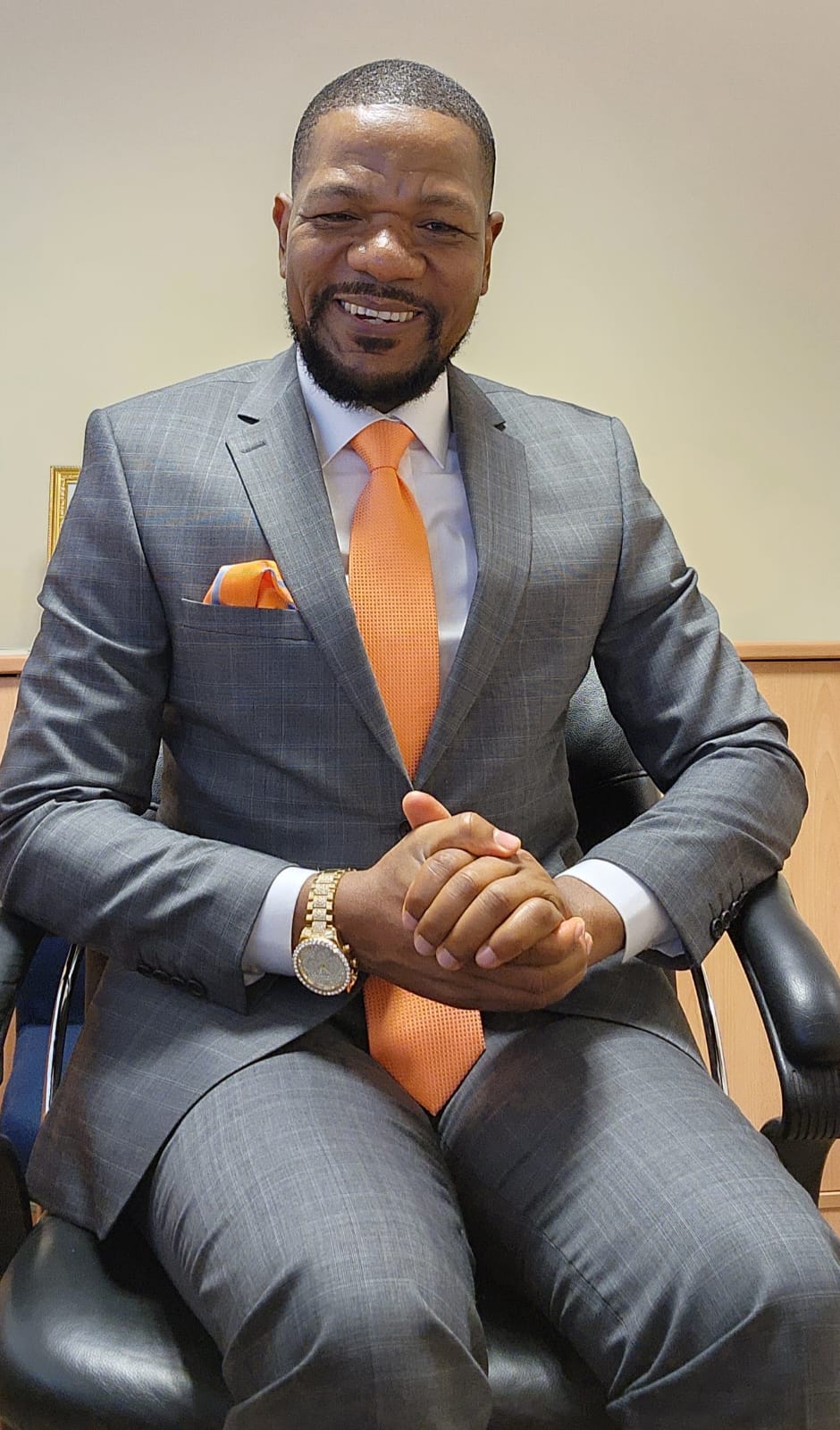
Cameroonian environmental policy expert Dr Richard Munang appointed Director of UNU-INRA, bringing an unprecedented record of global firsts to the United Nations University\'s flagship institute for Africa\'s natural resources.
Cameroonian-born environmental policy expert and global climate leader, Dr Richard Munang, has been appointed Director of the United Nations University Institute for Natural Resources in Africa (UNU-INRA), becoming the first Cameroonian to head the institution charged with advancing sustainable natural resource governance across all 54 African countries.
The appointment, announced by the United Nations University on July 13, 2026, takes effect on September 14, 2026, and places the son of Jinkfuin village in Belo Subdivision, Boyo Division of the North West Region, at the helm of the United Nations University\'s only Africa-based institute dedicated exclusively to natural resources.
The official announcement was made by the United Nations University through its website, describing Dr Munang as a scholar and policy leader whose unique blend of academic excellence, practical implementation and international leadership will strengthen the institution\'s work across Africa and the Global South.
His appointment comes with an extraordinary global record.
According to the United Nations University, Dr Munang is the only leader to simultaneously hold four groundbreaking distinctions that have shaped international environmental governance.
He is the first person to develop the Africa Adaptation Gap Report, a landmark publication that transformed how African countries advocate for climate adaptation financing on the global stage.
He also became the first expert to establish Africa\'s technical standards for affordable solar dryers, helping reduce post-harvest losses while improving food security and farmers\' incomes across the continent.
In another historic milestone, Dr Munang became the first Black person to head the Global Environment Monitoring Systems at the United Nations Environment Programme (UNEP), overseeing the global platform that monitors the health of the world\'s air, water and oceans.
He later made history again as the first Black person appointed to lead the Global Programme on Crimes that Affect the Environment at the United Nations Office on Drugs and Crime (UNODC), where environmental destruction was, for the first time, formally considered in court judgments, resulting in stronger penalties against environmental crimes.
UN Hails Appointment
Welcoming the appointment, United Nations University Rector and United Nations Under-Secretary-General, Prof Tshilidzi Marwala, described Dr Munang as bringing \"a rare mix of scholarship, programming and implementation.\"
He said such leadership would prove invaluable as the University expands its knowledge generation, strategic partnerships and development impact across Africa and the wider Global South.
Headquartered at the University of Ghana in Legon, Accra, UNU-INRA is the only institute within the United Nations University network devoted entirely to natural resource governance in Africa.
Established in 1986, the institute supports African governments, researchers and institutions by generating scientific evidence, policy recommendations and practical solutions for the sustainable management of land, forests, water resources, fisheries, minerals and energy.
Beyond its headquarters in Ghana, the institute operates regional units in Cameroon, Senegal, Côte d’Ivoire, Namibia and Zambia.
Its mission is to ensure that Africa\'s abundant natural resources contribute to inclusive economic growth, environmental sustainability and improved livelihoods across the continent.
From Jinkfuin to the World
Behind Dr Munang\'s international accomplishments lies a journey that began in rural Cameroon.
Born and raised in Jinkfuin village in Belo Subdivision of Boyo Division, he started his education at Government Secondary School Jinkfuin before proceeding to Baptist Comprehensive High School (BCHS) Njinikejem.
He later attended Government Bilingual High School (GBHS) Bamenda before enrolling at the Higher Teacher Training College (ENS) Bambili of the then University of Yaoundé I, where he studied Physics and Education.
His academic brilliance earned him a prestigious joint Chevening Scholarship to the University of Nottingham in the United Kingdom, where he obtained a Master of Science degree in Environmental Change.
He subsequently won the highly competitive Overseas Research Students Award, enabling him to pursue doctoral studies in Environmental Change and Policy at the same university.
Following the completion of his PhD, Dr Munang joined Trinity College Dublin in Ireland as a Research Fellow, where he specialised in linking scientific research with practical public policy.
That combination of scientific rigour and policy implementation would later define his career within the United Nations system.
Leading Africa\'s Climate Agenda
Dr Munang joined the United Nations Environment Programme (UNEP) in 2009.
For the next decade, he served as Africa Regional Climate Change Coordinator, leading one of the continent\'s most extensive climate action portfolios across more than 50 African countries.
Rather than limiting his work to policy formulation, he supported governments in integrating climate resilience into national budgets, agricultural systems, food security programmes, renewable energy initiatives and national development planning.
His leadership later earned him promotion to Deputy Regional Director of UNEP\'s Africa Office, where he coordinated climate change, environmental governance, biodiversity conservation, public health and sustainable development programmes across all 54 African countries.
In that capacity, he mobilised strategic partnerships and financial resources to strengthen Africa\'s adaptation efforts, nature conservation initiatives and circular economy programmes.
Historic Global Firsts
Dr Richard Munang\'s rise within the United Nations system has been marked by a succession of unprecedented achievements that have redefined environmental governance both in Africa and globally.
In 2023, he became the first Black person to lead the Global Environment Monitoring Systems (GEMS) at the United Nations Environment Programme. The programme monitors the condition of the world\'s air, freshwater and oceans, providing scientific evidence to guide environmental policies across continents.
Under his leadership, GEMS evolved beyond a traditional monitoring platform. He championed the integration of real-time environmental data, enabling governments to respond more quickly to emerging threats instead of relying solely on periodic reports.
He later broke another barrier when he became the first Black person appointed to head the Global Programme on Crimes that Affect the Environment at the United Nations Office on Drugs and Crime (UNODC).
There, he led efforts to strengthen the fight against environmental crimes, including illegal logging, wildlife trafficking, pollution and illicit mining.
One of the programme\'s most significant achievements under his stewardship was the use of environmental evidence — including satellite imagery, ecological assessments and scientific data — to support criminal prosecutions.
For the first time, environmental destruction became a determining factor in judicial decisions, leading courts to impose stiffer penalties and higher fines on offenders. The initiative also demonstrated how environmental enforcement data could guide investment decisions, linking environmental justice with sustainable economic development.
Innovations That Changed Africa
Long before assuming these global leadership roles, Dr Munang had already established himself as one of Africa\'s foremost climate innovators.
Among his most influential contributions was the creation of the Africa Adaptation Gap Report, the first continental assessment that quantified Africa\'s adaptation needs and financing requirements.
The report fundamentally changed the continent\'s engagement in global climate negotiations by elevating adaptation to the same level of importance as greenhouse gas emission reduction. It continues to shape discussions on climate finance and resilience across Africa.
Dr Munang also pioneered what has become known as Innovative Volunteerism, an approach that transforms environmental challenges into business opportunities for young Africans.
Rather than viewing climate change solely as a threat, the initiative empowers young people to generate livelihoods through clean energy, climate-smart agriculture, sustainable food systems and circular economy enterprises.
According to available records, more than three million young Africans have benefited from the approach, while climate accountability initiatives promoted under his leadership have reached nearly 12 million people through local governance structures.
He further developed Africa\'s first technical standard for affordable solar dryers, providing farmers with low-cost technology to reduce post-harvest losses, improve food preservation and expand agro-processing.
The innovation has enhanced food security while increasing farmers\' incomes and strengthening rural economies.
Dr Munang also introduced the continent\'s first climate-action market incentive guidelines, creating practical frameworks that promote clean energy adoption, sustainable agriculture and climate-resilient investments.
His policy advocacy contributed to incorporating cassava flour into bread standards, reducing dependence on imported wheat and encouraging greater utilisation of locally produced crops.
Championing Green Economies
Determined to bridge the gap between environmental sustainability and economic development, Dr Munang founded the Ecosystems-Based Adaptation for Food Security Assembly (EBAFOSA).
The continental platform brings together governments, development partners, financial institutions, farmers and the private sector to promote green economic growth while improving food security and creating employment opportunities.
He also developed innovative blended finance mechanisms that combine community cooperatives, entrepreneurship training, insurance products and market access to make grassroots climate projects financially viable.
Several African governments have since incorporated these financing models into national climate and development strategies.
Recognising the importance of education, Dr Munang established the first university curriculum dedicated to climate-action entrepreneurship at Nasarawa State University in Nigeria and Ba Isago University in Botswana.
The programme equips students with practical skills needed to build businesses that respond to climate challenges while supporting sustainable economic growth.
Academic Excellence
Alongside his policy and development work, Dr Munang has maintained an outstanding academic career.
He holds a Doctor of Philosophy (PhD) in Environmental Change and Policy from the University of Nottingham in the United Kingdom.
He also earned an Executive Certificate in Climate Change and Energy Policymaking for the Long Term from the Harvard Kennedy School of Government at Harvard University in the United States.
Dr Munang has authored more than 100 scholarly publications, including peer-reviewed journal articles, books and book chapters covering climate change, environmental governance, food security, natural resource management and green economy transitions.
He serves as Adjunct Research Professor at Western University in Canada, where he supervises graduate students and conducts research on climate resilience, environmental risk, planetary health and data-driven policy development.
His contributions have earned international recognition, including being named among the world\'s Top 50 Thought Leaders in Sustainability and the Top 100 Sustainability Voices in Africa and the Middle East.
His honours also include the University of Nottingham Alumni Award and the United Nations Environment Programme\'s Baobab Award for Programme Innovation, among numerous other distinctions.
Vision for Africa\'s Natural Resources
As Director-designate of UNU-INRA, Dr Richard Munang will lead the United Nations University\'s flagship institute responsible for advancing research, policy and innovation in natural resource governance across Africa.
The institute works with governments, universities, research institutions and development partners to generate scientific evidence that informs policies on the sustainable management of land, forests, water, fisheries, minerals and energy resources.
Its mandate also includes strengthening the capacity of African institutions to transform natural resources into drivers of inclusive economic growth while safeguarding the environment for future generations.
Operating from its headquarters at the University of Ghana in Legon, Accra, UNU-INRA serves all 54 African countries through research, policy advisory services and strategic partnerships.
In addition to its headquarters, the institute maintains operating units in Cameroon, Senegal, Côte d’Ivoire, Namibia and Zambia.
The appointment places a Cameroonian at the centre of one of the continent\'s most influential knowledge institutions on natural resource governance.
‘This Appointment Belongs to Cameroon and Africa’
Reacting to his appointment, Dr Munang dedicated the achievement to God, Cameroon and the African continent.
> “This appointment belongs first to God, then to Cameroon and to Africa,” he said.
> “It reflects many years of work with communities, governments, researchers and young people who are proving that evidence-based environmental action can change lives.”
He outlined his vision for the institute, saying Africa\'s immense natural wealth must be managed through science, practical public policy and home-grown solutions.
> “At UNU-INRA, my focus is simple. Africa\'s natural resources must be governed with sound science, practical policy and solutions designed by Africans, for Africans, in ways the world can learn from,” he stated.
A Milestone for Cameroon
Dr Munang\'s appointment represents one of the most significant international leadership appointments secured by a Cameroonian within the United Nations system in recent years.
From the classrooms of Government Secondary School Jinkfuin in Belo Subdivision to leading global environmental programmes at UNEP and the United Nations Office on Drugs and Crime, his career has been defined by scientific excellence, innovation and public service.
His appointment also reinforces Cameroon\'s growing contribution to global leadership in science, environmental governance and sustainable development.
For the people of Jinkfuin in Boyo Division, the appointment marks a remarkable journey from a rural community in the North West Region to the leadership of the United Nations University\'s premier institute on Africa\'s natural resources.
Effective September 14, 2026, Dr Richard Munang will assume responsibility for guiding research, innovation and policy that shape how Africa manages its vast natural wealth, ensuring that science, evidence and African-led solutions remain at the heart of the continent\'s sustainable development agenda.
The appointment is both a personal milestone and a source of national pride, placing a Cameroonian scholar at the forefront of efforts to help Africa harness its natural resources for prosperity, resilience and sustainable development.
Published on: July 14, 2026