Dr Simon Munzu Reopens Debate on State Centralisation, Anglophone Grievances
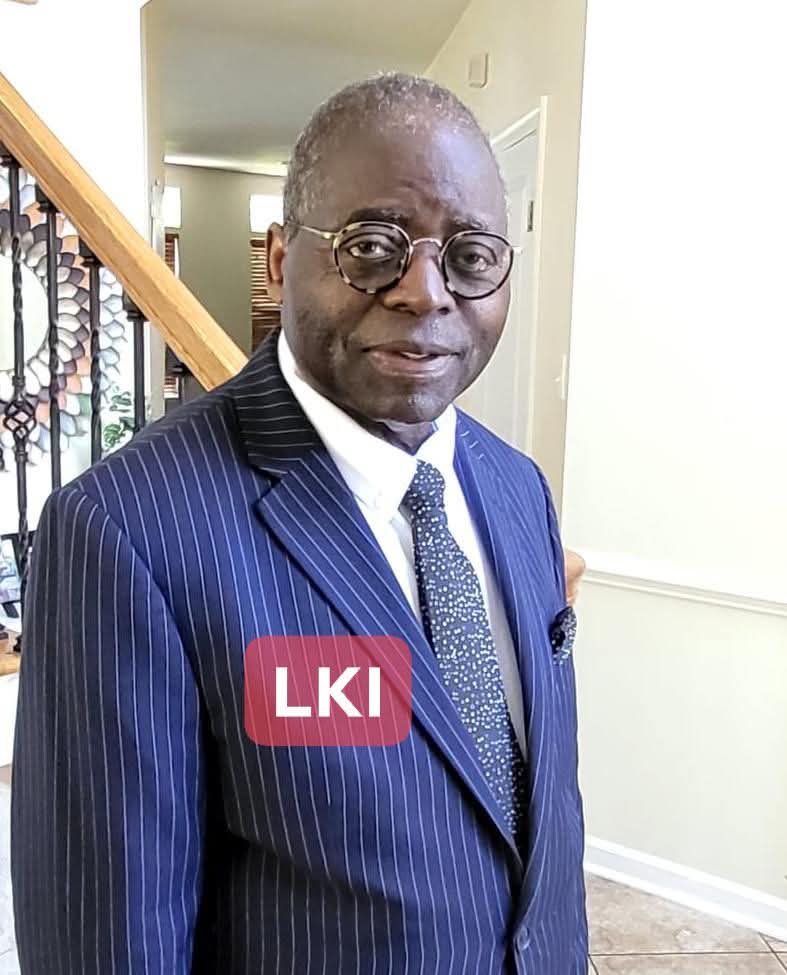
Former United Nations Secretary-General’s Deputy Special Representative for Côte d’Ivoire, Dr Simon Munzu, has renewed calls for structured national dialogue and constitutional reflection to address what he describes as a persistently “violent and unresolved” Anglophone crisis in Cameroon.
Speaking during an interview on My Media Prime TV on Sunday, May 10, 2026, the Cameroonian international lawyer and academic said the situation in the North West and South West regions has seen no qualitative change since the outbreak of the crisis nearly a decade ago.
According to him, insecurity, economic disruption, school closures and population displacement continue to characterise daily life in the affected regions.
He noted that both state security forces and armed separatist groups have yet to demonstrate sufficient political will to engage in sustained negotiations aimed at ending the conflict.
“The crisis remains violent and armed. It has not changed in its nature or its consequences. It continues to result in deaths, economic deterioration and displacement of populations,” Dr Munzu said.
He added that the humanitarian and socio-economic impact remains severe, particularly on education, livelihoods and mobility within the two regions.
Concerns over governance reforms and institutional balance
Dr Munzu also weighed in on recent institutional developments, notably the creation of the post of Vice President, questioning its relevance within Cameroon’s strongly centralised constitutional framework.
He described the reform as an additional administrative layer that does not fundamentally address the underlying governance concerns raised in the Anglophone regions.
“The post of Vice President is merely an addition to an already heavy state machinery,” he said, noting that existing constitutional provisions already provide for presidential succession through the President of the Senate.
He questioned the practical utility of the office, arguing that its functions appear largely dependent on presidential discretion rather than clearly defined constitutional powers.
While some observers have suggested that the post could serve as a symbolic avenue for the inclusion of Anglophones, Dr Munzu cautioned against reforms that remain largely symbolic without altering the structural balance of the state.
Federal legacy, assimilation debate and historical grievances
Returning to the historical foundations of the state, Dr Munzu revisited the federal arrangement established in 1961 between the former British Southern Cameroons and French-speaking Cameroon, which he said guaranteed equal status between the two federated states.
He recalled that the abolition of federalism in 1972 marked a major turning point in the country’s governance architecture and contributed to longstanding grievances in the Anglophone regions.
According to him, these grievances have been reinforced by perceptions of increasing centralisation and what he described as a gradual assimilation of Anglophone institutions, legal traditions and identity.
He further stressed that what he termed “domination and assimilation” has been a recurring concern over the past 30 to 40 years.
“What have we been complaining about for the past 30 to 40 years? Domination and assimilation. So, is there anything new there? This is just one more manifestation of a practice that has been going on for the past 40 years. Honestly, I am quite indifferent to that because there is nothing new,” he said.
Dr Munzu further stated that President Paul Biya had, in a past exchange with philanthropist Mo Ibrahim in Paris, acknowledged that attempts had been made to assimilate Anglophones, but that they had failed due to cultural attachment.
“What did you expect? President Biya himself has told us he is a self-confessed assimilationist. Not that we had any doubt before, but it was significant to hear him say so himself in response to a question Mr Mo Ibrahim asked him at a meeting in Paris. President Paul Biya simply said they had tried to assimilate the Anglophones, but had failed because people have an attachment to their culture,” he stated.
He added that such remarks, as he interpreted them, continue to fuel debate over identity and the nature of state unity in Cameroon.
“So President Paul Biya does not hide the fact that he is, and has been, an assimilationist. Therefore, it is not surprising that he has been indifferent to all our calls, all our petitions, and everything over the past 40 years for something to be done to put an end to the situation,” he further noted.
“The two entities came together on the basis of equality as provided for in the federal Constitution of 1 October 1961. That arrangement lasted until 1972 before it was abandoned,” he added.
He maintained that calls for greater autonomy stem from what he described as a progressive assimilation of Anglophone institutions within a highly centralised system.
Pope’s visit and appeal for change
Dr Munzu further reflected on the recent visit of the Holy Father to Cameroon, noting that it came at a moment of continued national tension.
He said it was expected that attention be given to the Pope’s call for peace during his visit, especially given President Biya’s Catholic background and seminary formation.
He argued that such moments should inspire deeper reflection on national reconciliation and peacebuilding.
Call for structured dialogue and national reflection
The former UN official maintained that a resolution to the crisis remains possible, provided there is political will from all sides to engage in meaningful dialogue.
“It is possible, because what is involved is simply a willingness on the part of the protagonists to meet and talk,” he said.
He reiterated that President Biya, as a self-confessed assimilationist, had over the years resisted numerous attempts to convene dialogue to resolve the crisis.
“He has been blocking all attempts—numerous attempts, scores of them—that have been made for people to sit down, discuss, and find a solution to this problem,” he said.
Dr Munzu described himself as an “incurable optimist,” expressing hope that a change in leadership in the future could create conditions more favourable to dialogue and negotiation.
He, however, urged the President to take steps while still in office to convene a genuine national conference to address the crisis.
“He should call a genuine conference, not the so-called Major National Dialogue that was held in 2019. A genuine conference to resolve this matter,” he said.
He added that it would be regrettable if the current situation persisted without resolution.
Conclusion
Dr Munzu called for reflection on the future of Cameroon, urging the Head of State to consider the legacy he will leave behind.
He expressed hope that the President would reflect deeply on the country’s trajectory and take steps toward national reconciliation.
Profile
Dr Simon Munzu is a Cameroonian international lawyer, academic and former senior United Nations official. He holds degrees from the University of London and a PhD in Law from the University of Cambridge.
He has served in several UN peacekeeping and governance missions, including in Rwanda, the Democratic Republic of Congo and Côte d’Ivoire, where he was Deputy Special Representative of the Secretary-General from 2014 to 2016.
In Cameroon, he chaired the Commission on Reconstruction and Development of crisis-affected regions following the 2019 Major National Dialogue.
He continues to advocate for constitutional dialogue, national cohesion and a peaceful resolution of the Anglophone crisis.
By Lasha Kingsly
Published on: May 11, 2026