Constitutional Amendment: Parliament Meets in Congress in Yaounde
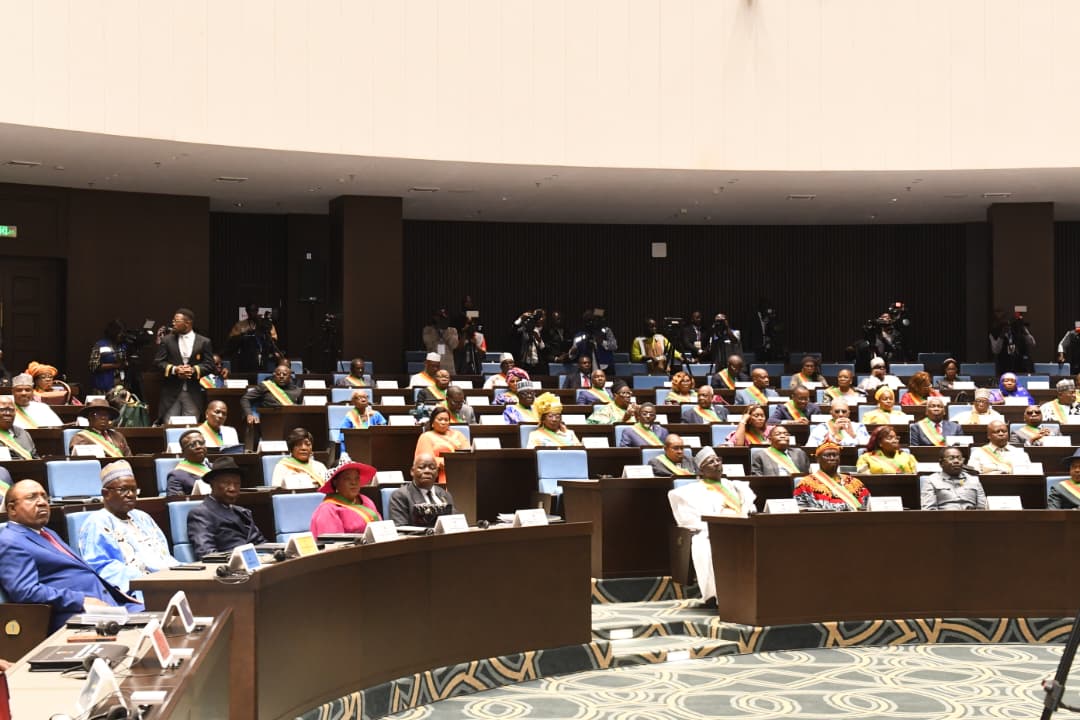
Members of the National Assembly and the Senate today, April 2, 2026, began sitting in Congress at the Paul Biya Glass House in Yaounde, in accordance with the Constitution and Bureau Order N°2026/0043/AB/BC, signed by the Speaker of the National Assembly, Rt. Hon. Theodore Datouo, convening the session. Rt. Hon. Datouo presides over the Congress in his capacity as President of the Bureau of the Congress of Parliament.
According to the Bureau Order issued at the request of the President of the Republic, the Congress convened at 11 a.m. to examine amendments to certain provisions of the Constitution. The decision is anchored on the Constitution, as well as Law N°2014/016 of September 9, 2014, laying down the Standing Orders of the National Assembly, and Law N°2014/017 of the same date relating to the Standing Orders of the Congress of Parliament.
Sources within Parliament indicate that, after the solemn opening session, deliberations will continue within a special committee comprising 30 members, with 15 drawn from each of the two chambers. Prior to the commencement of committee work, the Conference of Presidents is expected to meet to define the organisation of proceedings. Committee deliberations are scheduled to continue on Friday and Saturday, while a plenary sitting devoted to the adoption of texts is programmed for Sunday, April 5, 2026, at 4 p.m., followed by the closing session of Congress.
This is the sixth Congress, following the fifth, which was convened for the inauguration of the Head of State on November 6, 2025. It is holding in line with declarations made by the Head of State, Paul Biya, during his inaugural speech, in which he indicated that texts would be introduced in Parliament to adjust laws to fit the country’s realities.
Although the detailed agenda has not officially been disclosed, indications suggest that the revision of certain constitutional provisions may feature prominently among issues under consideration. Discussions are reportedly taking place in the context of the extension of the mandates of Members of Parliament and municipal councillors. Reflections are also said to focus on the duration and modalities of these mandates, particularly those concerning municipal councillors. The possible creation of a high-level State responsibility is equally reported to be under examination.
Under the Constitution, Parliament, composed of the National Assembly and the Senate, meets in Congress only under specific circumstances, notably for constitutional revision, the oath-taking ceremony of the President of the Republic, or a solemn address by the Head of State.
Article 63 of the Constitution provides that any bill or proposal for constitutional amendment may be submitted either to a referendum or to Parliament sitting in Congress. In such a case, the amendment is adopted by a two-thirds majority of members of Parliament.
Furthermore, Article 11 (2) stipulates that the President of the Republic may convene Parliament in Congress to deliver a message on major national issues. Such a message does not give rise to debate. Article 14 (3) equally provides that Parliament shall meet in Congress in cases provided for by the Constitution, under the chairmanship of the Speaker of the National Assembly.
The ongoing Congress is therefore considered a significant moment in the country’s institutional life, as lawmakers deliberate on issues relating to constitutional reform.
Published on: April 2, 2026