Major Constitutional Reform: Biya Proposes Creation of Vice president Post
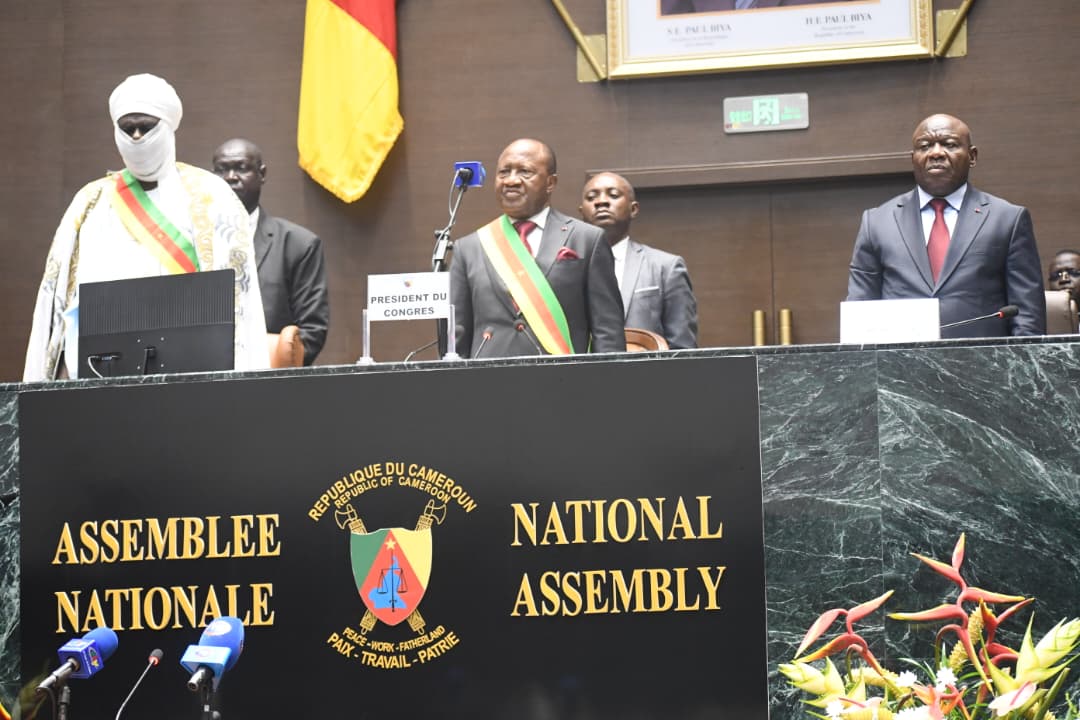
Cameroon may soon witness one of its most significant institutional reforms in recent decades following the tabling of a constitutional amendment bill by President Paul Biya. The proposed legislation, Bill N° 2094/PJL/P, introduced on April 2, 2026, seeks to create the post of Vice-President, marking a major shift in the country’s executive structure since the 2008 constitutional revision.
The reform, presented before the 6th Congress of Parliament meeting at the National Assembly’s Paul Biya Glass House in Yaounde, is in line with commitments made by the Head of State during his November 6, 2025 inauguration, to adapt State institutions to contemporary realities and improve governance efficiency.
Presidential Tandem
Central to the reform is the establishment of a “presidential tandem,” under which the Vice-President will be appointed by the President of the Republic and may be relieved of duties at the discretion of the Head of State. The Vice-President will perform functions delegated by the President, within a framework designed to reinforce coordination in the management of State affairs.
The draft text also provides strict eligibility and integrity requirements. The Vice-President will be required to declare assets and will be prohibited from holding any other elective mandate or engaging in private professional activities while in office.
New Succession Mechanism
A key innovation of the bill concerns presidential succession. In the event of vacancy arising from death, resignation or permanent incapacity, the Vice-President would automatically assume office and complete the remainder of the seven-year mandate.
Under the current constitutional arrangement, such a situation requires the President of the Senate to act as interim Head of State pending the organisation of fresh elections. Authorities argue that the proposed mechanism will enhance institutional stability while reducing the financial and logistical burden associated with emergency presidential polls.
Accountability Provisions
The proposed reform also maintains legal safeguards. In accordance with Article 53 of the Constitution, the Vice-President would remain accountable before the High Court of Justice for acts such as conspiracy against State security.
Parliament Begins Deliberations
Proceedings opened at the Congress of Parliament with the Speaker of the National Assembly, Rt. Hon. Theodore Datouo, calling on Members of Parliament and Senators to examine the proposed amendments with a sense of responsibility. He underscored that the initiative reflects the Head of State’s commitment to remain attentive to the aspirations of Cameroonians.
Following the opening session, the bureaux of both the National Assembly and Senate moved into committee to scrutinise the bill. The joint sitting is expected to reconvene in plenary for detailed examination and possible adoption of the proposed constitutional changes.
Observers note that adoption of the reform would entail adjustments to the Electoral Code and the functioning of the Constitutional Council, pointing to broader institutional reconfiguration.
As deliberations continue, the proposed introduction of a Vice-President signals a potential evolution of Cameroon’s governance architecture, aimed at strengthening executive continuity, improving efficiency and ensuring greater institutional stability
Published on: April 2, 2026