Economic Hardship: Cameroonians Crushed by Soaring Prices and Stagnant Wages
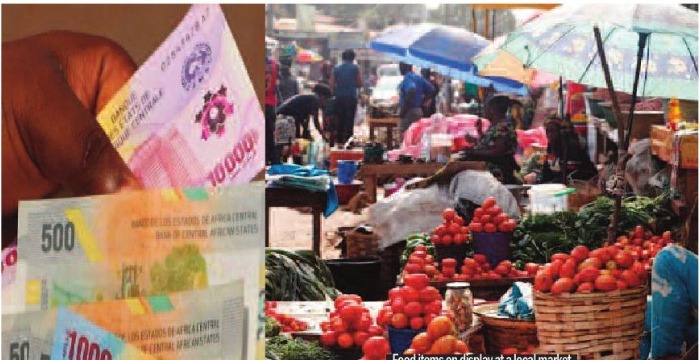
In Cameroon today, hardship no longer arrives like a storm. It settles quietly, stays permanently, and wears people down day after day. It is felt in the empty cooking pot, in unpaid rents, in children sent home from school, and in workers who earn a salary but still cannot survive. From the village grandmother selling cassava by the roadside to the civil servant in Yaoundé counting transport money, the same sentence is heard everywhere: “Money finishes before the month ends.” Figures relayed by French news paper, Eco Matin and supported by national economic data confirm what Cameroonians already know from lived experience, the cost of living has risen sharply between 2000 and 2026, while government policies meant to protect the population have largely failed. Behind the statistics lie real human consequences: hunger, debt, anxiety, social tension, and a growing sense of abandonment. This is not a temporary hardship. It has become a way of life.
When Eating Becomes a Daily Calculation.*
Food is the first place where economic hardship shows itself. When food becomes expensive, survival itself is threatened. In 2000, a family could buy broken rice at 300 FCFA per kilogram. Today, the same rice costs between 750 and 1,000 FCFA. Mackerel fish, once sold at 700 FCFA, now goes for about 1,850 FCFA. Sugar has risen from 350 FCFA to 850 FCFA, while a 50-kilogram bag of flour, essential for bread and household consumption, has doubled from 12,000 FCFA to around 24,500 FCFA. These are not luxury foods. They are the basics of daily life. The consequences are visible in homes across the country. Families now cook once a day instead of twice. Fish and meat are removed from the pot and replaced with seasoning cubes. Children leave for school without breakfast. Elderly people complain of dizziness and weakness. Health workers quietly report rising cases of malnutrition, especially among children and the aged. Women, who manage household food, feel the pressure most. Many say going to the market has become an emotional burden. “You go with money and return ashamed,” Government policy has provided little relief. For years, authorities have promised to boost agriculture, stabilize food prices, and protect consumers. Yet Cameroon remains heavily dependent on food imports. President Paul Biya has repeatedly spoken about import substitution, producing locally what the country consumes. But on the ground, the policy remains largely theoretical. Rice, wheat, sugar, fish, and even cooking oil are still imported in large quantities. When international prices rise or the CFA franc weakens, Cameroonians immediately feel the pain. Import substitution exists in speeches, development plans, and official documents and not in the market stalls.
*When transport costs rise, everything rises with it.*
In the year 2000, urban transport cost 125 FCFA. By 2026, the same trip costs about 350 FCFA. For someone earning a small salary or working in the informal sector, this is devastating.
The main cause is fuel. Petrol and diesel now sell above 800 FCFA per liter, compared to around 350 FCFA two decades ago. Each fuel increase pushes transport fares upward, which then pushes food prices higher, since goods must be moved from farms to markets. The result is a vicious cycle. Workers spend a large part of their income just to reach their workplace. Traders increase prices to cover transport costs. Students miss classes when transport money finishes. Farmers earn little at the farm gate, while consumers pay more in the city. Government fuel policy has worsened the situation. Fuel subsidies were reduced under pressure from international lenders and budget constraints, without adequate social protection. Authorities knew fuel price increases would raise transport and food costs ,yet no strong cushioning measures were put in place and the population absorbed the shock alone.
*House rent and land cost doubles.*
Housing was once a place of rest. Today, it is a source of fear. An apartment that rented for 60,000 FCFA in 2000 now costs 120,000 FCFA or more. In some neighborhoods, rents are even higher. For families earning the minimum wage of 36,270 FCFA, paying rent alone is impossible. As a result, families crowd into single rooms, share toilets with dozens of others, or move into informal settlements without water, electricity, or proper sanitation. Parents skip meals to pay landlords. Young couples postpone marriage because they cannot afford a place to live. Land prices tell the same painful story. A titled plot that once sold for 7,000 FCFA now goes for 100,000 FCFA or more in major cities. Home ownership has become a dream reserved for the wealthy. Government housing programmes have failed to respond at scale. Low-cost housing projects exist, but they are too few, too slow, and too expensive for ordinary citizens. Meanwhile, land speculation continues unchecked, driving prices higher and excluding the poor.
Wages standing still While prices run
Perhaps the greatest injustice of all is that wages have remained almost unchanged while prices have doubled and tripled. The minimum wage remains around 36,270 FCFA, an amount that cannot realistically cover food, transport, rent, health care, and education. Civil servants, teachers, security guards, and private-sector workers earn nearly the same salaries as years ago but now pay far more for everything. Purchasing power has collapsed. The informal sector, which employs the majority of Cameroonians, suffers even more. There is no salary adjustment, no inflation protection, no safety net. When prices rise, people borrow, sell assets, or rely on relatives abroad. Poverty is no longer limited to the unemployed, it now affects people who work every day.
*Country in bad shape despite mounting debt.*
One major factor worsening the crisis is excessive borrowing. The government has increasingly relied on loans from China Exim Bank and other external lenders to finance infrastructure projects and budget deficits. Borrowing, in itself, is not a problem. The problem is that these loans have not translated into improved living conditions for ordinary citizens. Debt servicing now consumes a large share of government revenue. To repay loans, the state tightens spending, cuts subsidies, delays salary improvements, and increases taxes. Once again, the burden falls on the population. Many Cameroonians ask a simple question: “If the country is borrowing so much, why is life getting harder?” Roads and buildings rise, but households sink deeper into hardship. The economy grows on paper, but people grow poorer in reality.
Life in Cameroon has become expensive not by accident, but by policy failure. Rising prices, weak protection for citizens, overreliance on imports, and heavy borrowing have combined to push millions into economic distress. As Eco Matin data shows, the numbers are alarming. But beyond numbers, the suffering is human. It is felt in the quiet despair of parents, the exhaustion of workers, and the hunger of children. Until policies move from paper to people, from speeches to the market, the cost of living will remain the greatest crisis facing Cameroonians, today, tomorrow, and for years to come.
By Prince Mundi
Published on: February 3, 2026